Media
This media page provides Media related FAQs and access to a downloadable media package containing background information on the PRECARE program, approved quotes, and key facts to support accurate and responsible reporting.
Due to the sensitive nature of cardiac arrest care and patient privacy, media engagement is managed carefully. We encourage journalists to contact the PRECARE team for clarification, expert comment, or interview requests. Please include MEDIA REQUEST in the subject title to ensure timely responses.
FAQs
What is PRECARE?
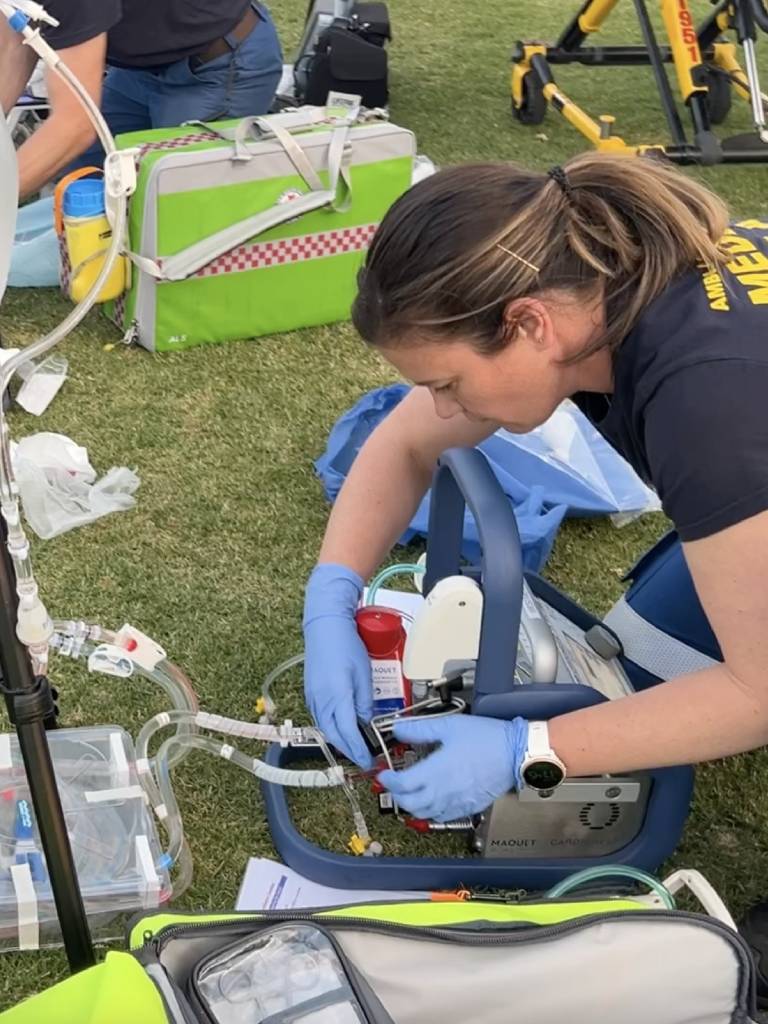
PRECARE is a specialised prehospital critical care trial program delivering advanced resuscitation, including prehospital extracorporeal membrane oxygenation (ECMO), to selected patients experiencing out-of-hospital cardiac arrest in Metro New South Wales
What is prehospital ECMO?
ECMO is a form of advanced life support that can temporarily take over the function of the heart and lungs when they have stopped working, it is already used world-wide in cardiac arrests, but only inside of an ECMO equipped hospital. Prehospital ECMO means this support is commenced at the patient’s side, before arrival at hospital, in carefully selected cases where standard resuscitation has not been successful.
When is pre-hospital ECMO used?
When pre-hospital ECMO is used it is sometimes called ECPR. Its only used in very specific circumstances for a small number of patients. Each case is assessed against strict clinical criteria, and ECMO is only commenced when it is considered potentially beneficial and appropriate. It does not replace traditional CPR and defibrillation, and does not cure cardiac arrest, it acts more as a ‘stop the clock’, allowing the brain and vital organs to still receive perfusion during cardiac arrest, giving time for transport to hospital, diagnosis, and treatment of the underlying cause.
How successful is ECPR?
This is what the PRECARE trial program aims to tell us. Outcomes from other programs internationally are also still being studied. PRECARE exists to better understand which patients may benefit, how care can be optimised, and how outcomes such as survival and neurological recovery can be improved. The program is deliberately cautious about making claims beyond the available evidence, as such, until the trial is complete we cannot answer this question directly. PRECARE Chief Investigators have been releasing studies during the course of the trial which are available on the Research Publications page.
Can media interview patients or families?
Patient privacy is paramount. PRECARE does not facilitate direct access to patients or families. Any patient stories shared publicly are done voluntarily and with appropriate consent, often at a later stage in recovery. For more information on information the media can report on, download the available Media Package, or Contact Us for more information and access to available content.
How should PRECARE be described in media reporting?
To ensure accuracy, media are encouraged to utilise the downloadable media package at the top of this page, this contains approved terminology with descriptions, key facts, pre-approved quotes from PRECARE clinicians, and current data. However it is important to acknowledge that PRECARE is used only in selected cases and avoid describing ECMO as a cure for cardiac arrest.
Who should media contact for comment?
All media enquiries, interview requests, and clarification should be directed to the contacts listed in the downloadable media package, or through the Contact Us page. This ensures timely, accurate, and responsible communication. PRECARE does have social media, however this is more clinically focused. You are welcome to follow us on any of our social media, also provided in the package.
 PRECARE