Patients and Family
You may be here because you or a loved one have received prehospital ECMO from the PRECARE team. We understand that encountering PRECARE may have been unexpected, overwhelming, or frightening. This page is here to help patients and families better understand the care provided, the team involved, and the purpose of this program. Continue reading for more information on PRECARE and a list of FAQs that may help.
If you’ve had an interaction with the PRECARE team, contact us and one of the team will respond when available.
Watch to learn more about the PRECARE team and pre-hospital ECMO.
PRECARE
PRECARE is a specialised medical program trial that delivers advanced life-saving care before a patient reaches hospital.
In some cardiac arrest cases, standard treatments are not enough to restart the heart. PRECARE teams are trained to provide prehospital ECMO (extracorporeal membrane oxygenation) a highly advanced form of life support known as ECPR that can temporarily take over the work of the heart and lungs when they have stopped working.
This treatment is delivered at the patient’s side, often at home or in the community, by a highly skilled team working closely with NSW Ambulance Paramedics.
ECMO does not cure the underlying cause of cardiac arrest, but it can provide critical time, maintaining blood flow to the brain and vital organs, while doctors work to identify and treat the cause once the patient arrives at hospital.
PRECARE is part of a carefully governed clinical program focused on improving survival and recovery for selected patients experiencing sudden cardiac arrest. Every case is assessed individually, and not all patients are suitable for this treatment.
FAQs
What is cardiac arrest?
Cardiac arrest happens when the heart suddenly stops beating. This means blood stops flowing to the brain and other vital organs. Cardiac arrest is life-threatening and requires immediate action to try to restart the heart.
It is different from a heart attack. A heart attack happens when blood flow to part of the heart is blocked, but the heart usually keeps beating. In cardiac arrest, the heart just stops.
What is ECPR (Extracorporeal CPR)
ECPR is an advanced treatment used when the patient is not responding to standard CPR, it is a form of heart bypass. Large tubes are inserted into the patient’s groin and they are placed on a machine that temporarily takes over the work of the heart and lungs to give the patient the best chance of survival. Effectively it is used to stop the clock and buy time for patients to have the cause of the cardiac arrest treated.
Patients are unconscious and do not feel pain during the procedure.
How is it decided whether someone receives ECPR?
Not every patient will benefit from ECPR. A specialist team carefully assesses each situation in real time.
ECPR will be considered when:
- The cardiac arrest was witnessed
- CPR was started quickly
- The patient was previously well
- The patient’s age is < 70 yrs
- Conventional CPR is not working to restart the heart.
These decisions are made by experienced senior clinicians using established criteria and protocols.
Does ECPR mean survival is likely?
ECPR offers an additional chance of survival when standard CPR has not worked. When a person’s heart has stopped and they are not responding to standard CPR, the situation is extremely serious and the chances of survival very low.
ECPR is considered in these circumstances because, for carefully selected patients, it may improve the chance of survival compared with continuing standard CPR alone. When the team decides to use ECPR, it means they believe there is still a meaningful possibility of recovery. However, recovery is not always possible. ECPR cannot reverse all of the effects of cardiac arrest. Even with this treatment, some patients will not survive. Recovery depends on several factors. One of the most important is how well blood and oxygen were reaching the brain during CPR. We cannot directly measure this in real time, but we know that outcomes are strongly influenced by how quickly CPR was started and how long the person went without effective circulation.
Can ECPR cause suffering or prolong dying?
ECPR is used with the intention of giving a patient a meaningful chance of survival. It is not offered when clinicians believe it would only prolong dying. ECPR itself is not painful. Patients receiving ECPR are sedated and closely monitored. Medications are given to ensure comfort, and any signs of pain or distress are treated promptly.
Cardiac arrest is a life-threatening event, and even with ECPR, recovery is not always possible. In these cases, the medical team regularly reassesses whether ongoing treatment remains in the patient’s best interests. This includes considering the likelihood of recovery, the patient’s known wishes and values, and whether the treatment is providing benefit.
If it becomes clear that ECPR is not leading to recovery, compassionate discussions are held with families about next steps. Treatment is never continued when it is considered medically futile. Our priority is to balance hope with realism, providing every reasonable opportunity for survival with meaningful recovery.
Who makes up the PRECARE team?
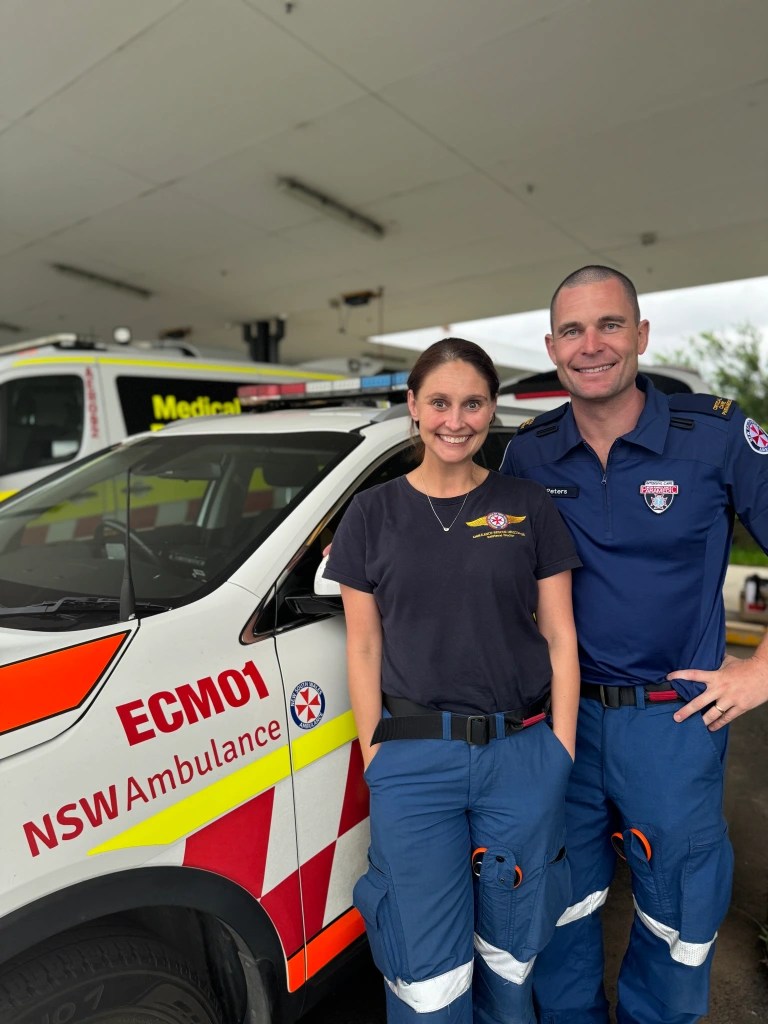
The PRECARE team is composed of 2 senior aeromedical specialist doctors and a critical care paramedic. This team has been trained specifically to provide ECPR in the prehospital environment for the PRECARE trial. The team is based in Homebush, using a rapid response vehicle.
What happens after prehospital ECMO?
Patients who receive pre-hospital ECPR as part of PRECARE are taken to one of three experienced ECMO centres: Royal Prince Alfred Hospital, St Vincent’s Hospital and Westmead Hospital. These hospitals have experience in looking after ECPR patients as their management can be quite complex.
ECPR is used to buy time for patients, to stop the clock and enable the cause of the cardiac arrest to be treated. Once the patient reaches hospital, patients will undergo tests to find and treat the reasons why the heart stopped, this usually involves a coronary angiogram where the arteries in the heart are examined and a blocked artery opened.
ECPR patients are in a very critical condition, they may require surgery or massive blood transfusion. These complications are best managed in experienced ECMO centres. Once the patient is stabilised, they are taken to the intensive care where they are closely monitored.
Why wasn’t ECPR used for my loved one (or why was it stopped)?
ECPR is a highly specialised treatment used in selected cases of cardiac arrest. Families often ask why it is not offered to every patient. This is an important and understandable question.
1. ECPR is Not a Standard Treatment for All Cardiac Arrest
Most cardiac arrests are treated with conventional CPR, defibrillation, medications, and advanced life support.
ECPR is considered only when:
- Patients are not responding to conventional CPR
- The cardiac arrest was witnessed, and the CPR was started almost immediately
- The patient was previously well
- The patient’s age is < 70 years
Even in ideal circumstances, ECPR does not guarantee survival.
2. Time Is Critical
The brain can only tolerate limited time without blood flow. If there has been a prolonged period without effective CPR, the likelihood of meaningful recovery becomes very low. In these situations, using ECPR may prolong dying rather than restore life.
3. Decisions Are Made by Experienced Senior Clinicians
Decisions about ECPR are made in real time by senior doctors using established clinical criteria and protocols. These decisions are:
- Based on medical evidence
- Focused on the patient’s best interests
- Reviewed and audited regularly
4. When ECPR Is Not Used
If ECPR is not offered, it does not mean that everything possible has not been done.
Every patient in cardiac arrest receives advanced life support according to national and international guidelines.
When ECPR is not appropriate, the specialist medical team provide:
- High-quality CPR and standard resuscitation therapies
- Additional advanced, targeted therapies to maxmise the chance of the heart restarting
- Respectful, dignified care
These decisions are never easy. They are made with care, integrity, and respect for every patient.
The PRECARE team are committed to:
Providing ECPR when there is a reasonable chance of meaningful recovery
Avoiding invasive treatment when it would not benefit the patient
Communicating openly and compassionately with families
Continually reviewing our outcomes to ensure responsible practice
What is the cost of the trial and how is it funded?
The cost of consumables to perform ECPR are approximately $10,000 per patient. This does not include a patient’s hospital stay. None of the PRECARE associated costs are passed on to the patient. The trial is sponsored by NSW Ambulance and supported with in-kind support by Westmead Hospital and RPA Hospital. The trial is also supported by GE Healthcare, Australian Blood Management. The trial received a Greenlight Foundation research grant and a NSW Health research grant. Funding for the PRECARE trial program currently runs until June 2026, it’s future after this is uncertain.
Will families receive any information about pre-hospital ECPR and the PRECARE study?
Yes. We understand that families want to know what happened before their loved one arrived at hospital. If pre-hospital ECPR was provided, the medical team will explain what treatment was given, why decisions were made, and what happened during those early stages of care.
Because these events unfold very quickly and in emergency circumstances, the information is often shared in stages as more details become available. We will keep families informed as clearly and honestly as possible.
If families would like a more detailed explanation after the immediate crisis has passed, this can be arranged. Our team is committed to open communication and will answer questions with compassion and transparency.
Support for families
We understand that cardiac arrest and ECPR can be overwhelming. It is normal to feel a range of emotions, including shock, sadness, guilt, or confusion. You are not alone, and support is available. Hospital will provide you with direct contacts and social workers, paramedics on scene can provide chaplains and support networks and there are a range of public access contacts available online. If you require specific support, or are struggling to find the information you require regarding PRECARE, ECMO and/or ECPR, contact us directly, and our team can offer you and your family support.
 PRECARE